
Cadence
AI-assisted CV screening for hiring teams. Every application is scored against a role-specific rubric the moment it arrives, then routed - clear passes and clear rejects handled automatically, the borderline band put in front of a recruiter with the model's reasoning attached.
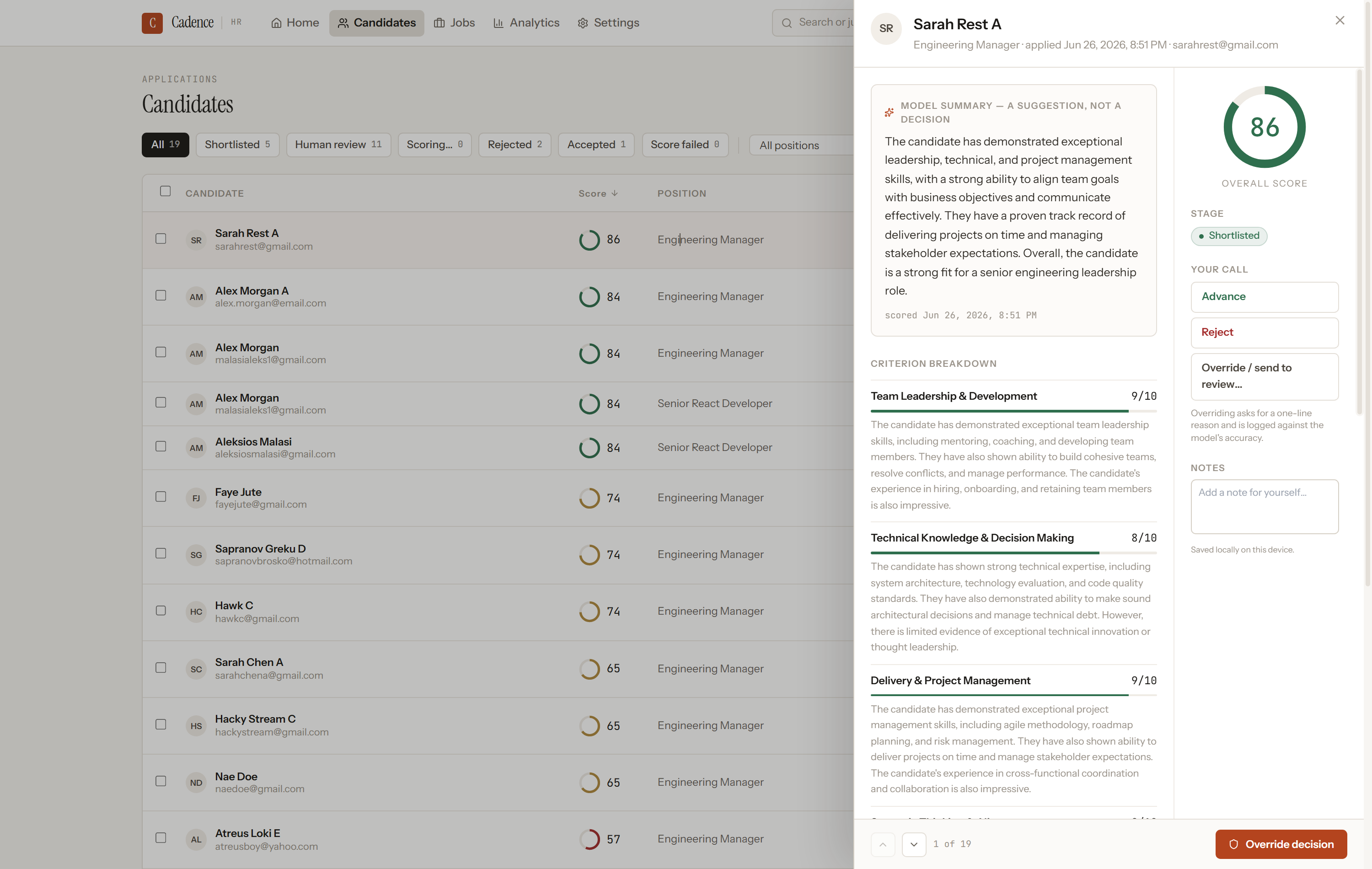
A recruiter reviewing a candidate's criterion-by-criterion score before making the call
From rubric to decision
04 stepsA role gets a rubric before it gets a link
The recruiter defines the scoring criteria for the role, each with a weight and the sub-points it covers, plus the score above which a candidate is auto-shortlisted and below which they are auto-rejected. Cadence generates a public application link from it.
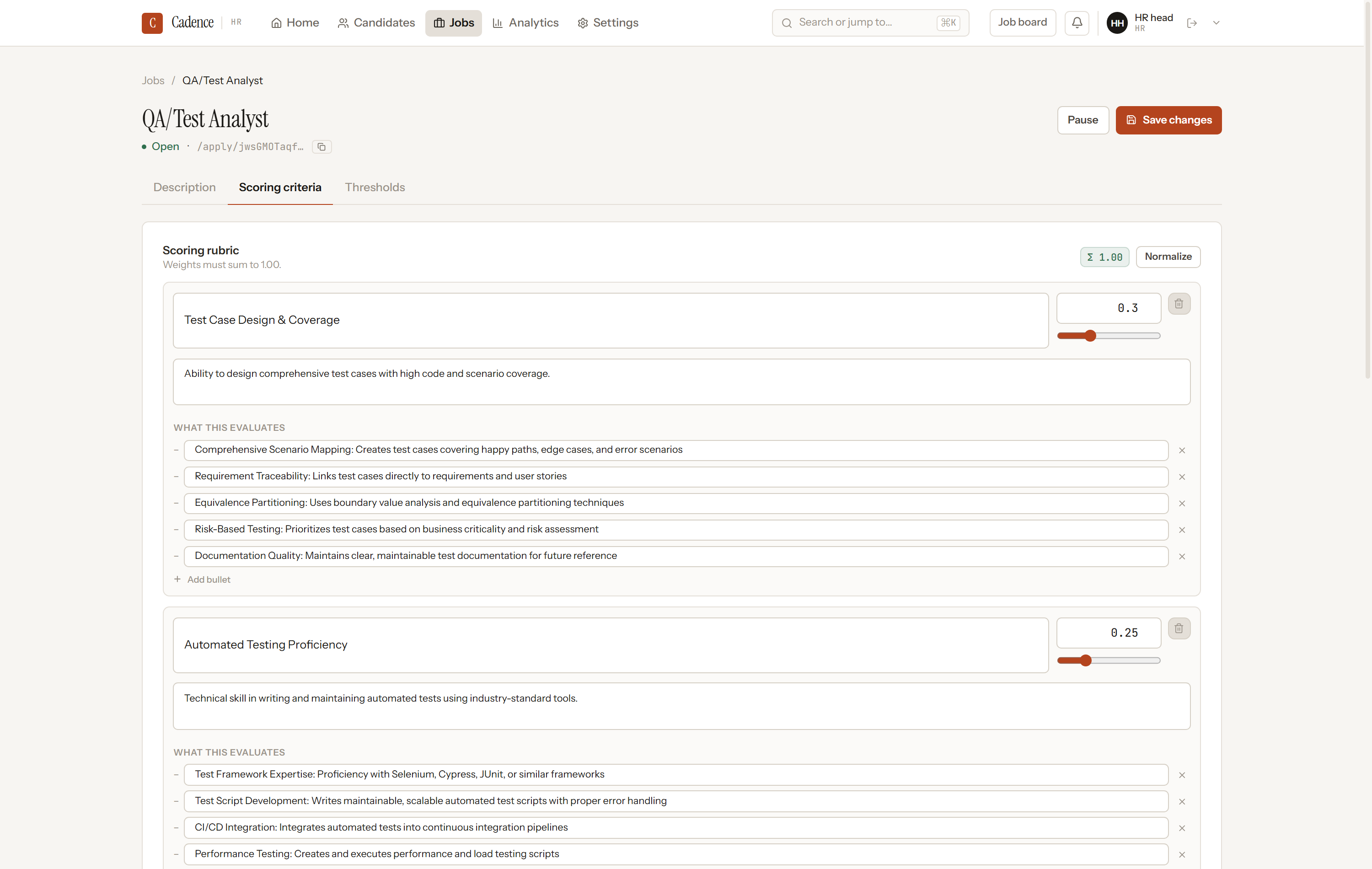
Rubric builder - weighted criteria and the advance / reject thresholds
The candidate applies against criteria they can see
The public page states plainly that a model scores the application first and a person reviews every borderline case. The candidate fills in their details, pastes their CV, and can open each criterion they'll be judged on.
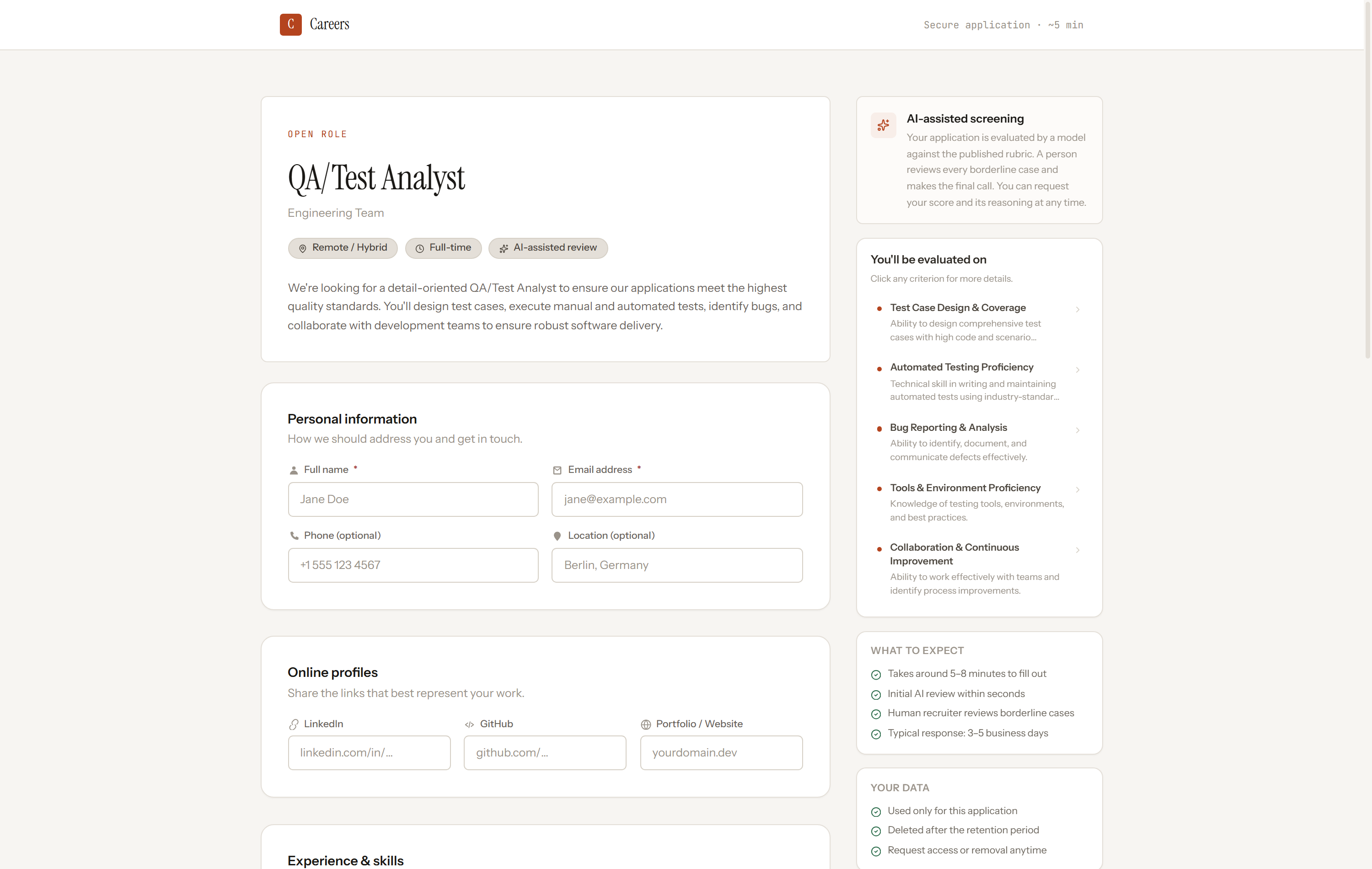
Public application form with the evaluation criteria listed alongside
Every application is scored the moment it lands
A background job scores each criterion from 0 to 10 with a written justification, weights them into a single 0-100 result, and adds a short summary. Scoring is deterministic and the same rubric is applied to everyone. The score then routes the application: shortlisted, rejected, or held for human review.
Candidate drawer - model summary, then each criterion scored and explained
The recruiter decides - and every override is recorded
Shortlisted candidates get an interview-scheduling invite and HR gets an alert; clear rejects get a polite email after a short hold. Everything in the middle waits in the queue. When a recruiter overrides the model, they leave a one-line reason and it is logged against the model's accuracy.
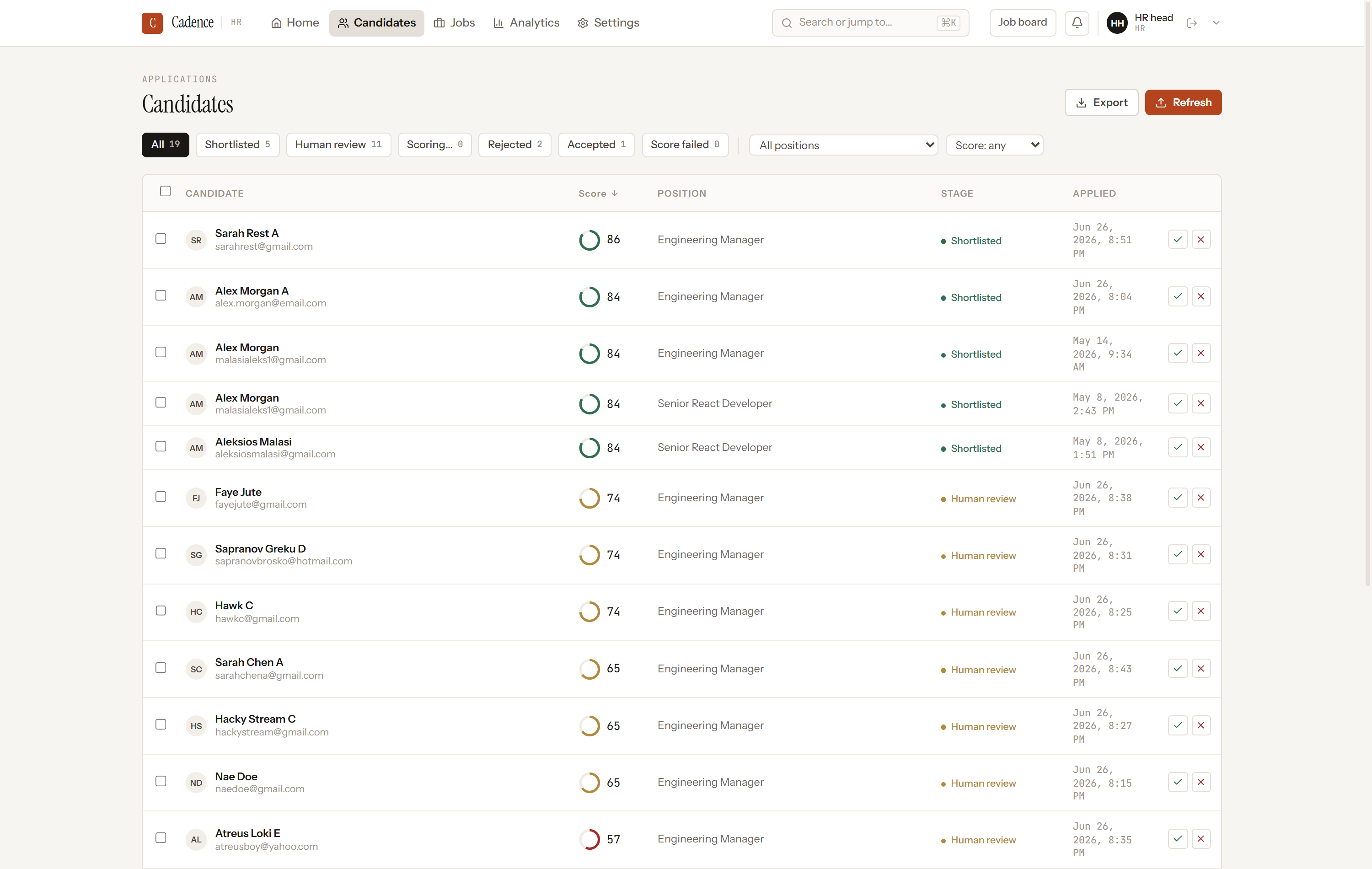
Candidates table - stage, score and the recruiter's advance / reject controls
What ships in Cadence
06 capabilitiesNamed criteria with weights that sum to one, each carrying the sub-points it covers, plus a threshold for auto-advance and one for auto-reject.
Every criterion is scored 0-10 with a written reason and a 2-3 sentence overall summary - not a single opaque number.
Above the advance line a candidate is shortlisted, below the reject line they are declined, and the band between is put in front of a person.
Shortlist alert to HR, interview-scheduling invite to the candidate, rejection after a configurable hold. Nothing is sent for the borderline band.
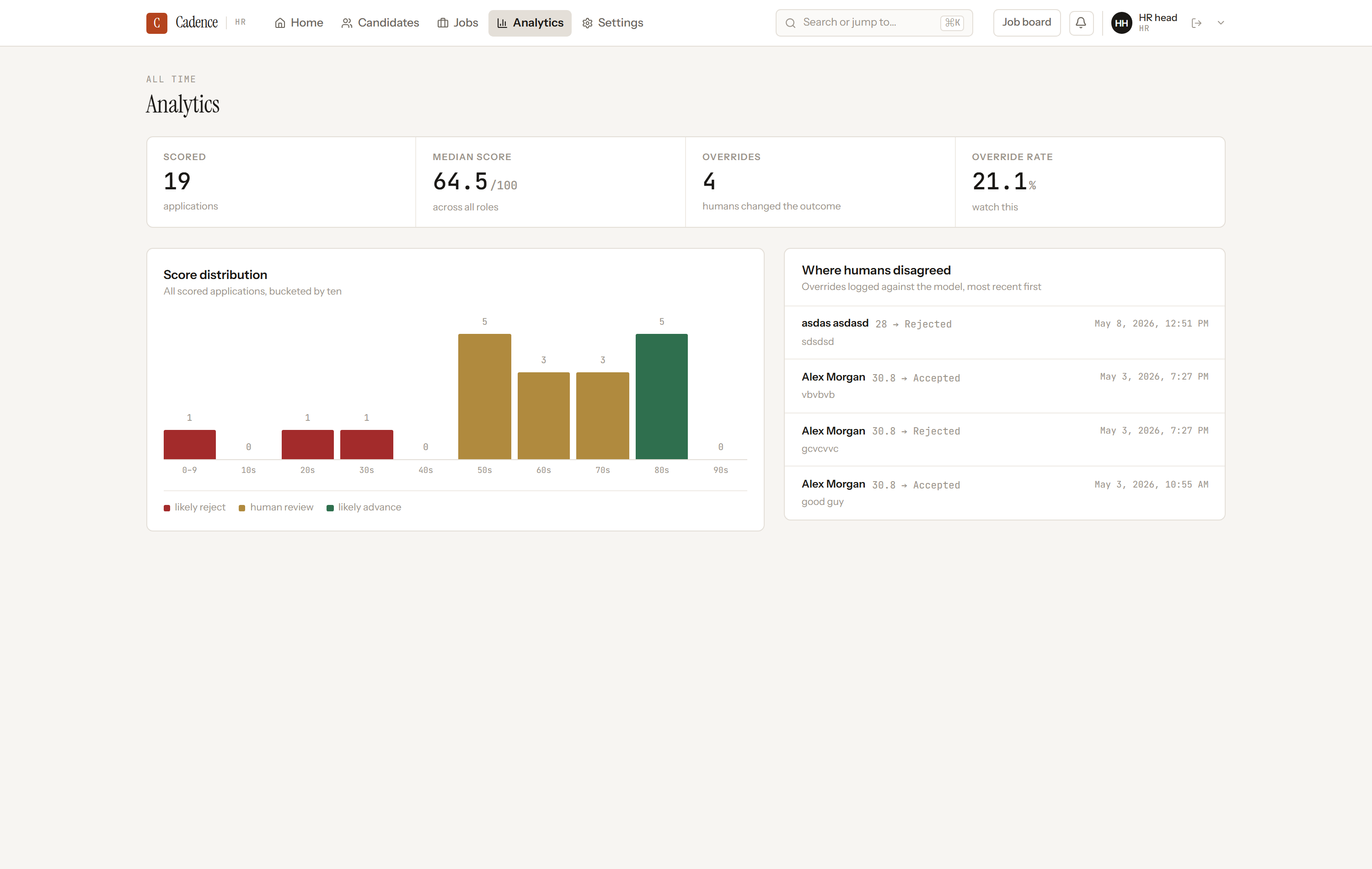
Each human change is captured with a mandatory reason, an override rate, and a view of exactly where reviewers disagreed with the model.
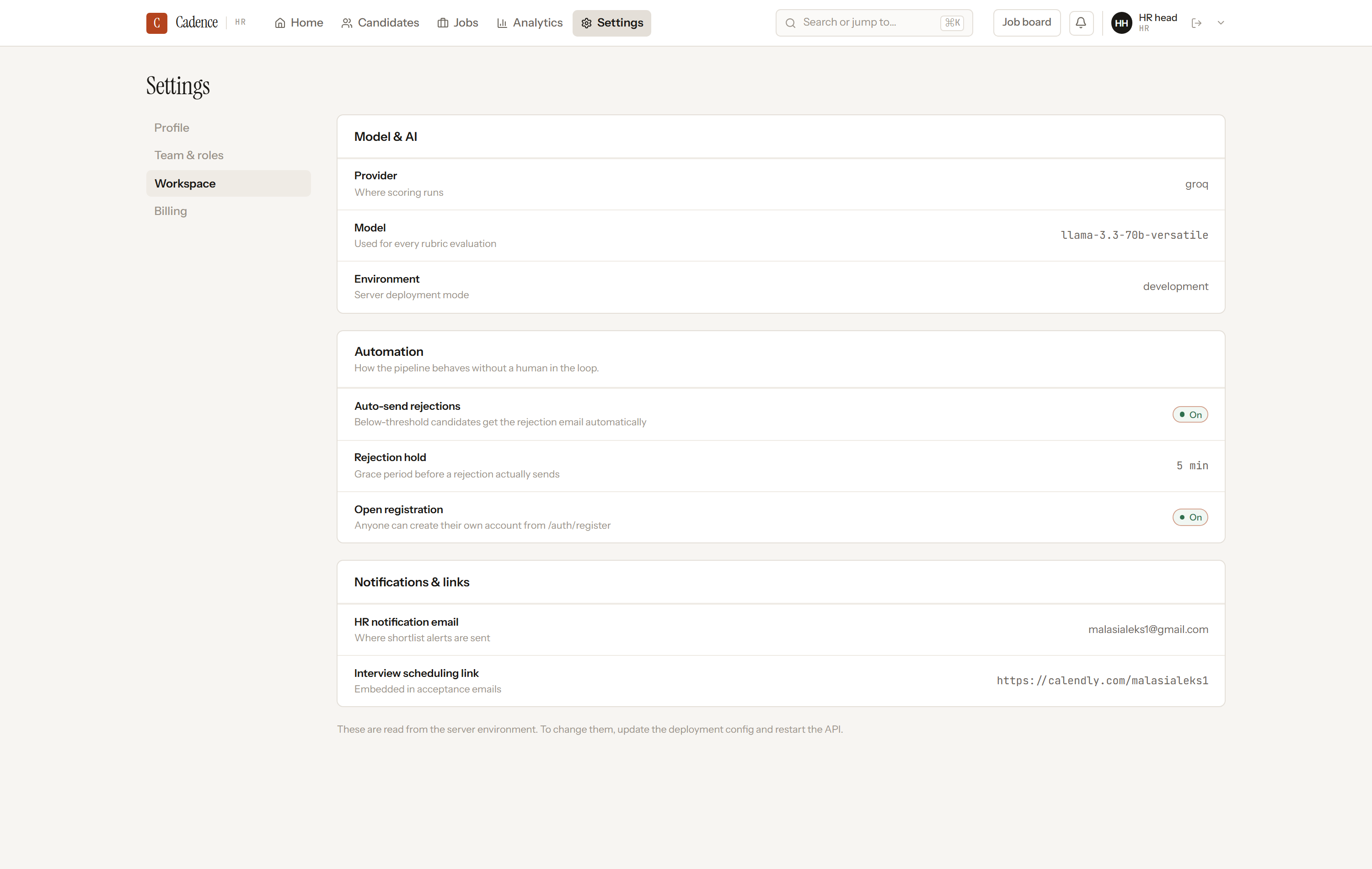
Gemini, OpenAI or Groq sit behind one scoring interface; the provider is a setting, not a rewrite.
Interface reference
Screens 01–04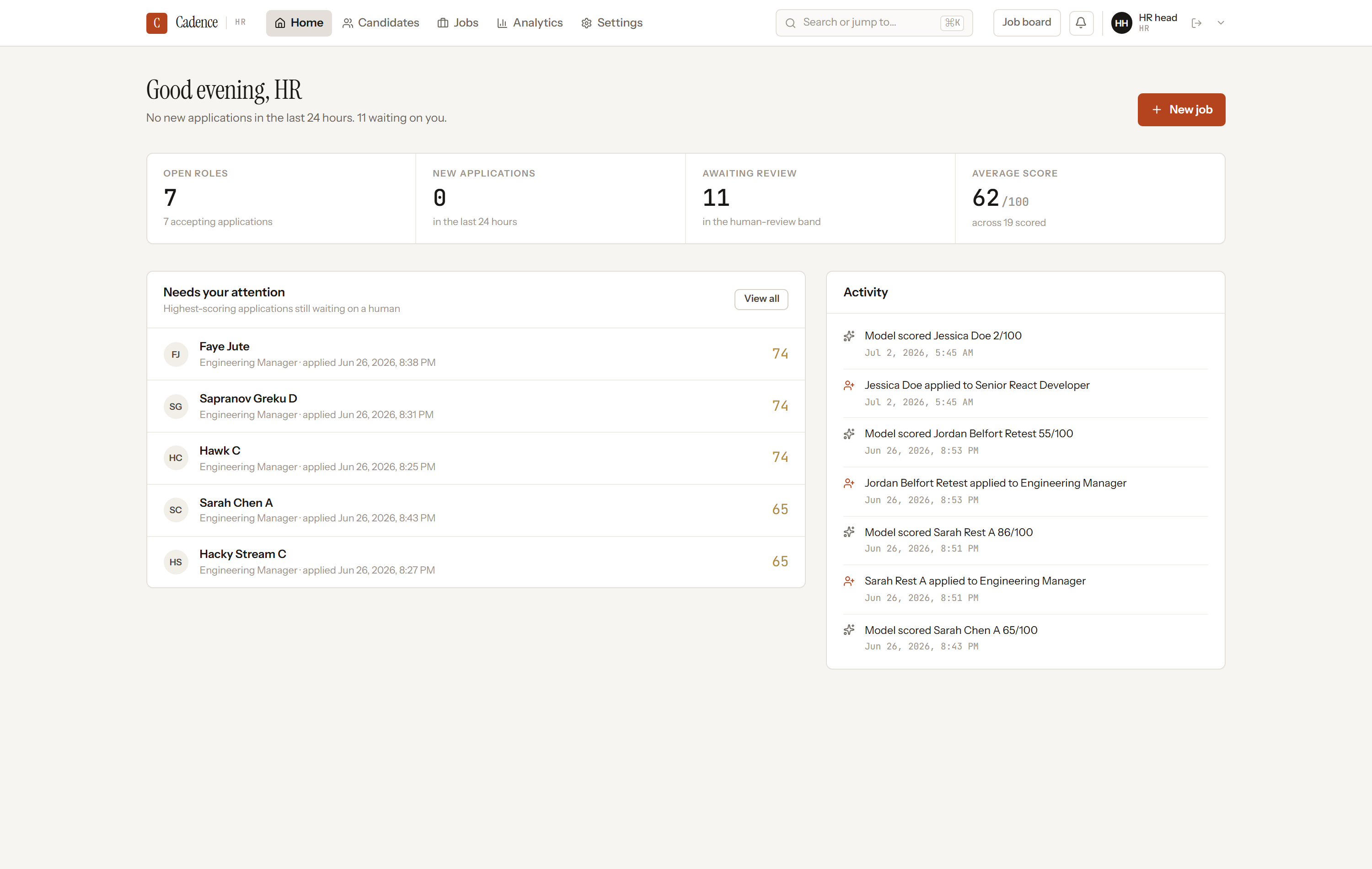
Built for hiring teams
Cadence replaces the shared inbox, the spreadsheet of names and the first-pass CV read that never quite happens consistently. The model reads every application against the same published rubric; a person makes every decision.
Typical use: 50–1,000 applications per role
Send us a job description and a batch of anonymised CVs. We'll build the rubric, score them in Cadence and show you the shortlist - and the reasoning behind each score -.
Book a demo